
Engine building board games represent a distinct category of strategic tabletop experiences where players construct interconnected systems to amplify their capabilities over time. These games prioritize player agency, enabling individuals to develop personalized strategies through thoughtful resource management and sequential upgrades. The genre’s core appeal lies in its marriage of immediate tactical decisions with long-term planning—a balance that separates casual play from competitive mastery. Yet what truly distinguishes these games becomes evident through examining their diverse mechanical implementations.
Key Takeaways
- Engine building games let players construct interconnected systems that amplify capabilities and resource generation throughout the game.
- Players strategically invest in upgrades and expansions to create personalized engines reflecting their chosen competitive approach.
- Successful engines reward patience through compounding mechanics, where early investments generate escalating advantages over subsequent turns.
- Engine builders demand meticulous planning to balance immediate resource gains against sustainable long-term economic development.
- Victory emerges from thoughtful decision-making in resource management, card selection, and strategic sequencing of engine components.
Splendor’s Gem Trading Mechanics
The gem trading mechanics demand calculated decision-making through token management, as the finite supply creates competitive scarcity. Players navigate three critical dimensions:
- Resource Acquisition vs. Deployment – Timing gem collection against card purchases determines engine efficiency and momentum.
- Discount Synergies – Development cards generate permanent cost reductions, enabling aggressive victory optimization through strategic layering.
- Noble Recruitment – Meeting resource thresholds unlocks bonus points, rewarding thorough engine construction over scattered acquisition.
This system grants players autonomy to pursue distinct pathways toward victory, balancing short-term gains against long-term economic dominance.
What Are Engine Building Board Games?
As players construct interconnected systems that amplify their capabilities over successive turns, engine building board games emerge as a distinct category defined by escalating resource generation and strategic compounding. These games liberate players from rigid turn structures by enabling self-directed progression through resource management and thoughtful investment.
The core game dynamics reward patience and foresight. Players begin with constrained options, systematically acquiring upgrades that unlock exponential returns. Each synergistic addition—whether through tableau building, deck construction, or card drafting—establishes feedback loops that compound advantage throughout gameplay.
This mechanical framework celebrates player agency. Rather than imposing predetermined paths, engine builders demand intelligent decision-making about which systems to prioritize. The genre’s appeal lies in its celebration of optimization: players craft personalized engines reflecting their strategic philosophy, transforming modest starting positions into formidable late-game powerhouses through deliberate, cascading improvements.
Gizmos’ Card Combo System

Victory comes from two main routes: building up played cards and completing goal-based objectives tied to specific card sets. The system encourages forward planning, as every choice can influence the options available in later turns, creating a satisfying sense of progression as your engine develops over time.
Published by CMON Global Limited, the game reflects the publisher’s strong focus on streamlined yet strategically engaging designs that reward thoughtful planning without slowing down the overall pace of play.
Terraforming Mars’ Resource Conversion
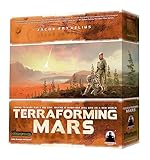

Multiple resource types form the lifeblood of *Terraforming Mars*, each serving distinct strategic purposes within the terraforming framework. MegaCredits, steel, titanium, plants, energy, and heat represent the fundamental currencies players manipulate to advance their objectives. Resource allocation demands meticulous strategic planning, as converting these commodities into terraforming actions—raising temperature, increasing oxygen, or placing ocean tiles—directly determines competitive advantage.
The engine-building mechanics reward deliberate investment in production cards that generate resources each generation. This temporal advantage creates exponential growth opportunities for disciplined players. Resource conversion mechanics boost scoring potential; specific cards grant bonus points for achievements tied to resource levels and terraforming completion. The system’s elegance lies in its interconnected design: ideal resource management simultaneously improves immediate terraforming progress and long-term point accumulation, forcing players to balance immediate gains against sustainable engine development.
Russian Railroads’ Network Expansion
Where *Terraforming Mars* builds engines through resource conversion across a planetary canvas, *Russian Railroads* constructs competitive advantage through deliberate network expansion across mapped territories. Players navigate three distinct railroad routes—Russian, German, and Industrial—each demanding strategic investment decisions. The game’s core tension emerges from balancing immediate track upgrades against long-term network development. Railway strategies diverge sharply; some players prioritize rapid expansion while others cultivate technological advantages that multiply future gains. Resource allocation becomes critical as players optimize their operations through factory development and tech investments. Track upgrades amplify network efficiency exponentially, creating cascading point opportunities. Timing proves crucial—premature expansion exhausts resources, while hesitation allows competitors to claim superior routes. *Russian Railroads* exemplifies engine building’s fundamental principle: converting constrained resources into exponentially expanding mechanical advantage.
Race for the Galaxy’s Card Drafting

Card selection forms the mechanical heart of *Race for the Galaxy*, transforming what could be a passive draw mechanism into an active strategic duel. Players navigate simultaneous decisions, choosing cards from a common pool while selecting actions that define their turn’s direction. This strategic balancing between immediate resource needs and long-term civilization development creates dynamic tension. World cards, technological advancements, and development cards facilitate powerful synergies that compound value. The mechanism’s brilliance emerges through its interactive consequences: discarded cards directly influence opponent strategies, ensuring every choice reverberates across the table. Victory hinges on players’ ability to synthesize card synergies while adapting to shifting board states. Success demands weighing short-term gains against future positioning, making *Race for the Galaxy* an exemplar of engine-building design where card selection determines dominance.
Keyflower’s Auction-Based Workers
Strategic placement of workers across tiles determines resource generation, building construction, and upgrades. Each season introduces new tiles and workers, forcing players to continuously recalibrate their approaches. The interplay between auction strategy and workforce management creates a sophisticated engine-building experience. Success requires not merely accumulating resources, but orchestrating complex synergies that compound across four seasons. *Keyflower* exemplifies how auction mechanics can deepen worker placement, rewarding foresight and adaptability.
Wingspan’s Habitat Engine

Every bird card in *Wingspan* functions as a potential stimulant for engine acceleration, transforming what appears as a simple collection mechanic into an intricate system of cascading synergies. Players construct habitat engines across forests, wetlands, and grasslands, each specializing in distinct resource generation: food production, card draw, and egg laying respectively. The strategic depth emerges through deliberate bird card placement that triggers powerful chain reactions. Resource synergy becomes paramount—thoughtfully combining bird abilities amplifies overall production exponentially, directly translating to higher victory points. The game’s unique goal system further encourages tactical flexibility, rewarding players who adapt their strategies to end-of-round objectives. This mechanics-driven approach liberates players to pursue diverse pathways toward engine enhancement, ensuring each playthrough presents novel synergistic possibilities and strategic freedom.
