
Dinosaur-themed board games occupy a distinct niche in the tabletop gaming market. They combine prehistoric aesthetics with varied mechanical frameworks, appealing to both casual and competitive players. These games range from cooperative survival experiences to intense strategic duels. Each title presents unique design philosophies and gameplay systems worth examining closely. Understanding their differences helps players identify which experience best suits their preferences. The following breakdown offers precisely that clarity.
Key Takeaways
- Dinosaur World is a worker placement game for 1-4 players, lasting 60-120 minutes, focused on building a safe and thrilling dinosaur park.
- Raptor is a fast-paced, two-player tactical game lasting 30 minutes, featuring asymmetric competition and simultaneous card reveals.
- Draftosaurus is a quick, accessible drafting game for 2-5 players, completing in just 15 minutes for only $20.
- SOS Dino is a cooperative game designed for ages 5+, making it an ideal choice for young children and families.
- Dinosaur Island combines dice rolling, worker placement, and resource management in a competitive 80s-themed park management experience.
Top Dinosaur Board Games List
Dinosaur game mechanics span lightweight drafting to heavy resource management, while dinosaur thematic elements range from park-building to tactical combat. Key entries include:
- Dinosaur World: Worker placement, 2-4 players, $50
- Raptor: Two-player card-driven tactical combat, $33
- Draftosaurus: Drafting, 2-5 players, 15 minutes, $20
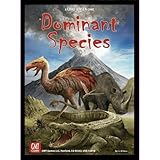
- Dominant Species: Heavy area control, 2-6 players, $60
- Dinosaur Island: Dice rolling, set collection, $40
Each title occupies a distinct complexity tier, allowing players to select experiences matching their strategic appetite and time constraints without redundant overlap between options.


Dinosaur Tea Party Overview
While the titles above skew toward complex strategy and resource management, the spectrum of dinosaur-themed games extends to deduction-focused designs targeting younger players. Dinosaur Tea Party challenges participants to identify dinosaur guests through attribute-based questioning, reinforcing logical reasoning within its game mechanics.
| Feature | Standard Play | Advanced Play |
|---|---|---|
| Target Age | 5+ | Older Players |
| Game Mechanics | Basic Deduction | Complex Reasoning |
| Player Interaction | Simple Questioning | Strategic Inquiry |
The whimsical tea party atmosphere sustains engagement without sacrificing analytical rigor. Player interaction drives the deduction process, requiring systematic elimination of possibilities. Advanced variants expand accessibility beyond children, positioning the game as a flexible alternative to traditional titles like Guess Who. Role-play elements reinforce imaginative thinking alongside critical reasoning, delivering measurable cognitive development through structured, competitive gameplay.
Dino World Overview
Shifting toward park construction and resource management, Dinosaur World, released by Pandasaurus Games in 2021, supports one to four players aged eight and up across sixty to one hundred twenty minutes of gameplay. Core game mechanics involve drafting dice to collect resources and purchasing hexagonal tiles for park expansion. Player strategies must balance two competing priorities: safety and thrill. The “Jeeple” mechanic drives tours through constructed parks, tracking guest boredom across visited tiles and directly influencing satisfaction outcomes. This mechanism demands calculated tile placement and resource allocation. The standard retail version is priced at $34.99, while the deluxe edition includes premium dice and multiple dinosaur meeple variants. Each decision carries measurable consequences, rewarding players who maintain disciplined, structured approaches to park development and tour management.
SOS Dino Overview

Contrasting the competitive resource management of Dinosaur World, SOS Dino operates as a fully cooperative experience targeting a significantly younger demographic. The game mechanics center on tile-drawing, obstacle placement, and collective egg rescue before lava overtakes the board. Cooperative gameplay demands active communication and shared decision-making among 2–4 players.
| Feature | Details |
|---|---|
| Players | 2–4 |
| Age Range | 5+ |
| Duration | ~30 minutes |
| Core Mechanic | Tile-drawing, obstacle placement |
| Objective | Rescue dinosaur eggs from lava |
The structure grants players genuine strategic autonomy within accessible rules. Vibrant artwork reinforces thematic immersion without obscuring tactical clarity. SOS Dino efficiently delivers meaningful group decisions, making it a mechanically sound entry point for younger players entering cooperative board gaming.
Raptor Overview

Unlike the cooperative structure of SOS Dino, Raptor positions two players in direct asymmetric opposition—one commanding a mother raptor, the other directing scientists attempting her capture. Simultaneous card reveals define its core game mechanics, forcing both players into calculated risk assessment before outcomes resolve. Each action card governs movement and tactical options, ensuring player strategies branch meaningfully across sessions.
The lower-valued card executes its action while the higher-valued card grants additional special effects, creating layered decision-making within each round. This numerical tension rewards analytical thinking and adaptation. At approximately 30 minutes per session, Raptor delivers concentrated competitive engagement without excessive commitment. Designed for ages 10 and up, its accessible yet strategically dense framework suits players who value autonomous tactical expression over predetermined cooperative outcomes.
Dinosaur Island Overview

Dinosaur Island reframes competitive board game design around theme park construction, tasking 1-4 players with building functional dinosaur attractions through DNA dice mechanics and set collection. Designed for ages 10 and up, sessions run 90-120 minutes, demanding sustained strategic commitment. Core game mechanics integrate dice rolling, worker placement, and resource management, creating layered decision points throughout play. Player strategies must balance two competing priorities: maximizing guest enthusiasm while maintaining adequate security infrastructure to prevent dinosaur escapes. Neglecting either variable produces cascading failures. The game’s 80s aesthetic reinforces its tone without compromising mechanical depth. Available expansions extend the dinosaur roster and introduce additional gameplay options, broadening strategic diversity across sessions. This structural flexibility rewards players who adapt their approaches rather than relying on fixed formulas.
Extinct Species Survival Game Overview
Where Dinosaur Island anchors its mechanics to theme park construction and guest management, Dino Dynasty shifts the competitive framework toward species survival and evolutionary adaptation across prehistoric settings. Players govern dinosaur dynasties, deploying evolution strategies to develop traits and abilities that counter environmental challenges threatening extinction. The legacy campaign mode creates consequential decision-making chains, where each session’s outcomes structurally alter subsequent gameplay. Modular scenario design further diversifies strategic demands, presenting variable maps and objectives that prevent repetitive play patterns. Extinction events function as mechanical pressure systems, forcing continuous adaptation rather than static optimization. Johan Egerkrans’s artwork reinforces thematic immersion without compromising strategic clarity. Dino Dynasty ultimately rewards players who analyze shifting environmental conditions and construct flexible evolutionary frameworks capable of sustaining species viability across unpredictable prehistoric terrains.
Dinotopia Board Game Overview
Cooperation replaces competition as the central mechanical framework in the Dinotopia Board Game, positioning 2-6 players within James Gurney’s illustrated world where humans and dinosaurs function as collaborative partners rather than adversaries. Game mechanics revolve around quest completion, resource management, and environmental navigation across the island’s varied terrain. Players accumulate points through task execution, with victory determined by reaching a designated point threshold first. Dinosaur-specific abilities introduce strategic asymmetry, compelling players to utilize partnerships deliberately rather than independently. Thematic immersion is reinforced through artwork and components directly sourced from Gurney’s acclaimed illustrated books, grounding mechanical decisions within an established visual language. The system rewards calculated coordination over individual dominance, making each session analytically engaging for players who prioritize strategic freedom within a structured, cooperative framework.
